
Places to visit in Delhi · Bahá'í House of Worship
Lotus Temple, Delhi: A Sacred Flower of Unity
The Lotus Temple in Delhi is a Bahá'í House of Worship designed to resemble a blooming lotus flower. It welcomes people of all faiths and offers a peaceful space for prayer, reflection, and cultural unity. Its unique architecture and inclusive spirit make it a must-visit landmark in India.
AI-generated guide. Written by AI from Wikipedia and checked by a second AI against it, but it can still contain mistakes. Please confirm timings, entry rules and fees with official sources before you visit.
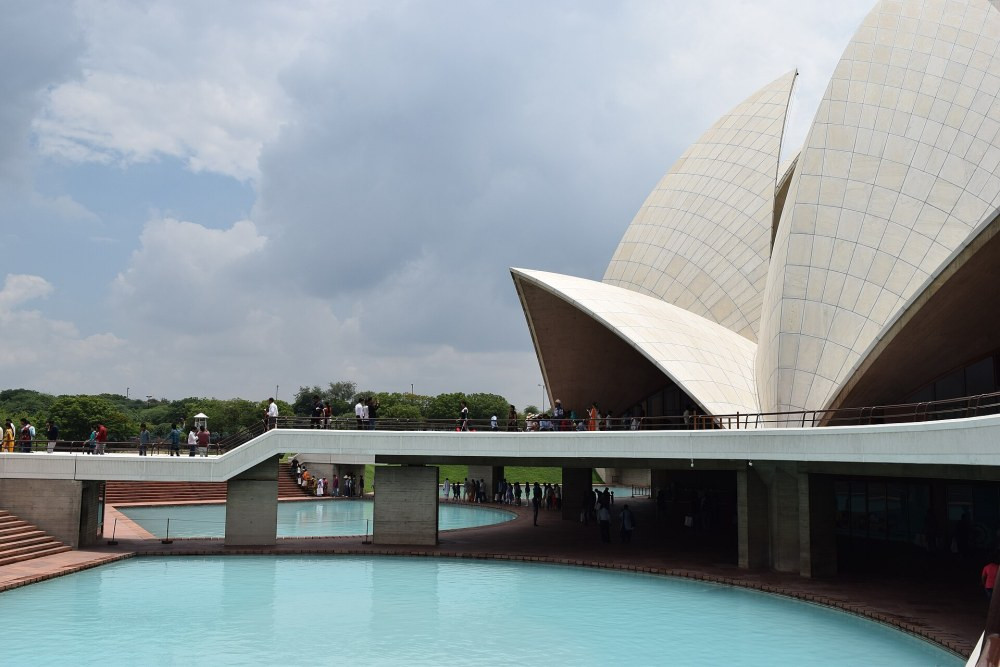
- Built
- 1980–1986
- Architect
- Fariborz Sahba
- Dedicated
- 24 December 1986
- Opened to public
- 1 January 1987
- Recognition
- Award of the Institution of Structural Engineers
- Recognition
- American Concrete Institute recognition as one of the world's finest concrete structures
- Location
- Delhi, Delhi · Map
Architecture and Views
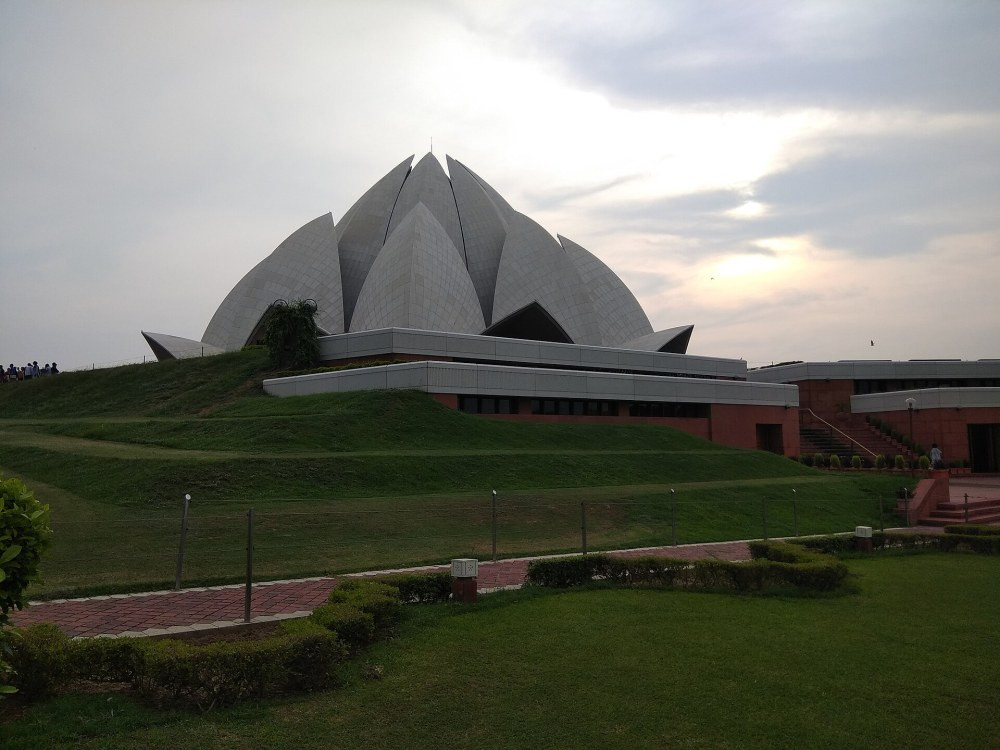
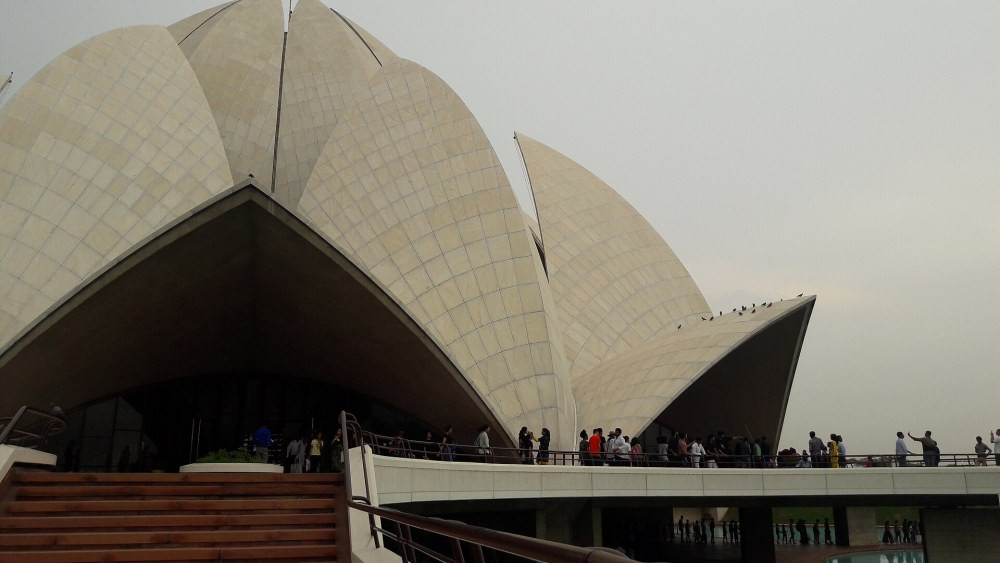
The Lotus Temple features 27 marble-clad petals arranged in three rings around a central hall. From a distance, it looks like a half-open lotus flower. The petals are made of concrete and clad in white Pentelic marble from Greece. Inside, the central hall has a dome that rises 28 metres above the floor. The design allows natural ventilation and daylight through glass in the crown. The temple is surrounded by nine pools that represent the lotus leaves, giving the impression of a flower floating on water.
History
The idea for a Bahá'í House of Worship in India began in 1920. The site in Bahapur was bought in 1954. The architect Fariborz Sahba won a global competition to design it. Construction started in 1980 and was completed in 1986. The temple was dedicated on 24 December 1986 and opened to the public on 1 January 1987. It was built by the ECC Construction Group of Larsen & Toubro.

Cultural and Religious Significance
The Lotus Temple is open to people of all religions, genders, and backgrounds. It reflects the Bahá'í principle of unity among all faiths. The lotus flower is sacred in Hinduism and Buddhism, symbolizing purity. The temple serves as a major spiritual site for Indian Bahá'ís. Worship includes readings from sacred texts of various religions, but no sermons or rituals are allowed.
Notable Features
The temple's design uses simple geometric forms like spheres and cones. The petals are 20 centimetres thick and made of concrete. The exterior is clad in marble, while the interior is a textured white concrete. The temple uses natural ventilation inspired by desert wind towers. It has received several international awards for architecture and engineering.
Visitor Experience
Visitors can enter the temple to meditate, pray, or simply enjoy the peaceful atmosphere. The central hall can seat up to 2,500 people. The surrounding gardens and pools offer a serene environment. The temple has been visited by over 100 million people since its opening. It is one of the most visited religious buildings in the world.

More views
Tips for your visit
- Wear comfortable footwear for walking on marble and stone paths.
- Dress modestly as it is a place of worship.
- Visit during daylight to see the full beauty of the marble petals.
- Bring a camera to capture the unique architecture.
- Stay quiet and respectful during prayer times.
Opening hours and ticket prices change; check the official website or the ticket counter before you go.
Written from Wikipedia: Lotus Temple (CC BY-SA 4.0) and Wikidata (CC0). Photos from Wikimedia Commons, credited under each photo.