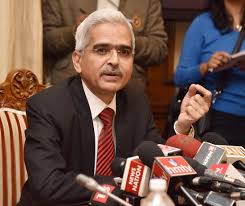
The Reserve Bank of India (RBI) released its half-yearly Financial Stability Report (FSR) today, saying the banking system is safe and capable of overcoming difficult situations due to higher capitalization and reduced linkage between banks, but the Covid-19 crisis. This can lead to a significant increase in stuck loans (NPAs).
RBI Governor Shaktikanta Das wrote in the preamble of the report, "The risk of slowing economic recovery is high, but there are also early signs of the economy getting better. But we have to be very alert and focused. The report states that the gross NPA ratio of banks was 8.5 percent in March, which in today's situation can reach 12.5 percent by March 2021. But if the situation is very bad, then the figure can reach 14.7 percent.
The capital to risk-weighted asset to capital ratio (CRAR) of banks has come down marginally to 14.8 percent in March 2020 from 15 percent in September 2019. But the general equity tier (CET) 1 capital ratio of banks, which was 11.7 percent in March, may come down to 10.7 percent by March 2021 under these circumstances. If conditions worsen, it may fall by up to 9.4 percent.
"Under these circumstances, three banks may also fail to achieve a minimum regulatory CET 1 capital ratio of 5.5 percent by March 2021," the FSR states. Despite this, banks have sufficient assets of high-quality liquid assets to meet their daily cash requirements. This time, some important concepts have been changed in the report. For example, 'extreme' pressure conditions are included in the risk analysis, but things like fraud in the banking system are excluded. Those left out will be included in the annual trends and progress report.
Governor Shaktikanta Das wrote in his preface, "The spread, intensity, and duration of the Covid-19 epidemic has created so much uncertainty that we have never seen in our lives."
The governor said that there have been signs of gradual improvement after a nationwide lockdown for some time. But the main objective at this time should be to maintain the long-term sustainability of the financial system, which is very important for taking reforms forward.
However, the report warns that near-term economic prospects appear to be severely affected, which have been affected by demand and supply disruptions due to the lockdown, reduced consumer confidence and risk aversion. Although the regulators and the government have taken steps at their level, the risks of weak economic prospects in the short term are high.
According to the RBI governor, efforts should be made to relax regulatory and other restrictions after the epidemic ends.
However, a recent RBI survey suggests that risk has increased in all major categories. Non-banking financial companies (NBFCs) and housing finance companies (HFCs), which are going through difficult times, have the highest debt of the financial system and much of this is from banks. But even if the largest of them could not repay the loan, the banks would not be out of whack because they are barely able to overcome and have sufficient capital and the size of the inter-bank markets are shrinking.


Launching a strong attack on Aam Aadmi Party and Delhi Chief Minister Arvind Kejri
After the order of the CBI inquiry by the Lieutenant Governor, the Delhi government, which is fac
Russia is preparing for a major attack on Ukraine. The Russian army soon wants to capture the cap
Nowadays smartwatch has become a necessity of the people, as the pandemic has shifted the attenti
Saying 'very less oxygen is left, patients will not be saved', the CEO of this hospital bursts
The lack of oxygen in the country's capital, Delhi, can be easily gauged by seeing the tears of a
Bahubali MLA Mukhtar Ansari was presented in Mohali court on Wednesday. Mukhtar Ansari was presen
The number of corona patients in the country has crossed 36 lakh on Sunday. In the last 24 hours,
After the announcement of the Akhil Bharat Hindu Mahasabha to recite Hanuman Chalisa and consecra
The National Consumer Disputes Redressal Commission (NCDRC) has directed IRDA to look into the ro
The Samajwadi Party government of Akhilesh Yadav, a member of the Samajwadi Party (SP), came to