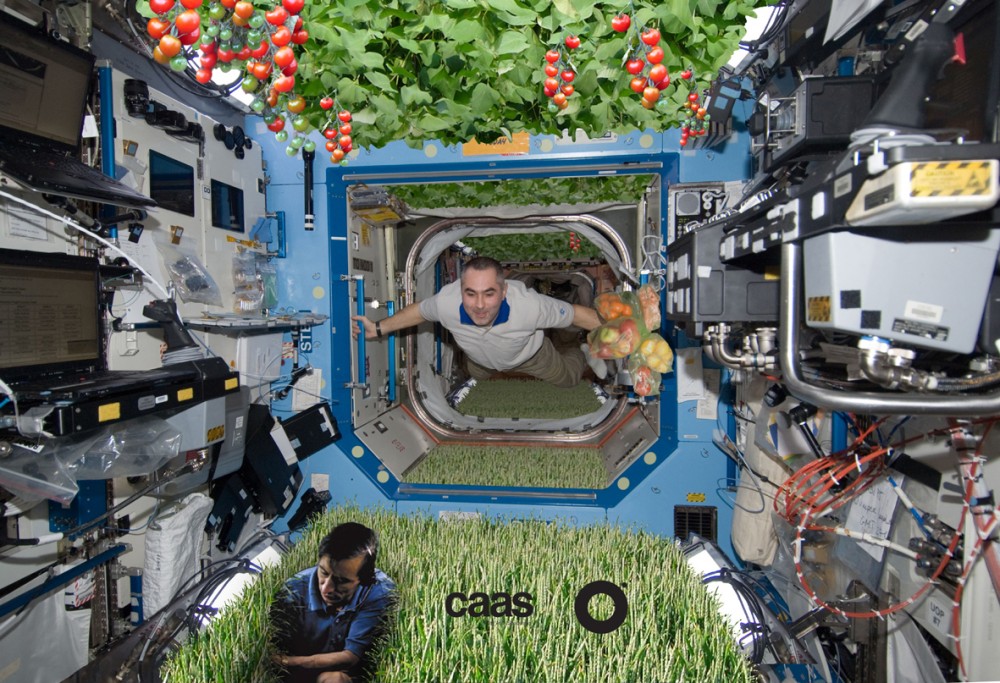
New Delhi, Feb 24 (IANS) Through posters, collages, photographs, infographics and videos, an exhibition in the capital will draw a parallel between Earth and outer space, bringing into focus questions about environmental degradation, sustainability and recycling.
Questions like "Is survival on earth becoming even more precarious than in space?", "Can our cities survive for long if they continue to grow irresponsibly?", "How can policy makers intervene to make our cities self-sufficient?" would be raised through "The Undivided Mind", an exhibition emanating from a two-week residency that explores the crossover between two seemingly unrelated fields of art and science.
This exhibition explores the ways in which scientific processes and discovery can be coupled with visual art production and vice-versa and has been created during the residency by the City As A Spaceship (CAAS) Collective and Rohini Devasher.
It will be open for public viewing at Khoj Studios from Feb 27 to March 3.
CAAS Collective comprises of Susmita Mohanty, spaceship designer and aerospace entrepreneur, Barbara Imhof, space architect and Sue Fairburn, scientist and design researcher.
Devasher is a visual artist who has participated in several past residency programmes at Khoj.
"Ever wondered how astronauts live in outer space? Their space habitat is not very different in size, basic amenities from that of a micro compact home or workspace in super dense cities like Mumbai, Tokyo, New York or Sao Paulo," said Mohanty in a statement.
"The extreme shortage of real estate, clean air, water, waste disposal in dense cities present living problems not dissimilar to those encountered in extra terrestrial, synthetic environments," she added.
According to Mohanty, smart cities are small, self-sufficient and those which utilise portable habitats - just like a space station.
"We want people to conceptualise, visualise and materialise how to tread the planet lightly," she added.
The works on display will focus on data collected through CAAS's interactions with people of Khirki Extension in south Delhi and the neighbourhood.
"Through our collages that juxtapose various living environments on earth and that in space, we want to create a dialogue that earth and space are not exclusive of each other," Fairburn, Canadian scientist who works with concepts of extreme physiology, said.


Fight to save soul of the struggle: Yadav
New Delhi, March 27 (IANS) AAP leader Yogendra Yadav on Friday said he along with fellow leader
Bollywood actor Salman Khan has once again received a death threat. A threatening message has bee
The Central Government has announced to give the highest civilian honor 'Bharat Ratna' to former
Pakistan's Interior Minister Rana Sanaullah said on Friday that the name of the country's next ar
On completion of one year of consecration of the idol of Ramlala, the annual ceremony will be cel
Central government in action to curb 'abuse' of Grok AI; contacted Elon Musk's X.
AI chatbot Grok appeared on the social media platform X of the world's richest man Elon Musk. But
Mumbai. Fear of coronaviruses are affecting every part of people's lives. People are withdrawing
Former Indian team batsman Shikhar Dhawan has left the Enforcement Directorate (ED) office after
Winter season, lack of food; Now India trusts Europe to pacify Russia
Nine months have passed since the war between Ukraine and Russia, but so far neither of them is r
Movie: depths
Director: Shakun Batra
Key Cast: Deepika Padukone, Ananya Panday, S