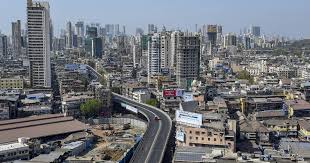
After the fourth phase of the lockdown, the central government has suggested to start most of the economic activity in other areas except about 6,000 Containment Zones across the country, but Maharashtra has decided to take strict action. Most states have extended the lockdown in the Containment Zone till June 30, but have prepared to start economic activities in other areas as per the Centre's guideline.
The new guideline, released on Sunday evening, has been titled 'Mission Re-launch' and Maharashtra's stand is different from the Centre's directive. It has said that bus services can be operated within the district but inter-district bus operations will continue to be banned.
In Maharashtra, cases of Covid-19 are steadily increasing, due to which religious places, restaurants, hotels and other hospitality service areas, shopping malls, barber shops, stalls and beauty parlors in the state will remain closed throughout the state. Tamil Nadu as well as Delhi and West Bengal have reported the highest number of infections in one day. However, Tamil Nadu said that malls and religious places in the state would remain closed. Along with this, inter-district bus services will also be banned.
The Center has given permission to open religious places, restaurants, hotels and shopping malls from 8 June in the guidelines issued on Saturday. Most states are also in favor of opening it.
Maharashtra has allowed all private offices to open from June 8 with a 10 per cent capacity, while markets and shops will be allowed to open on even-odd basis from June 5.
Auto-rickshaws and cabs will be allowed to ply with two riders in the Mumbai metropolitan area. Pune and other cities will be opened in a phased manner. Along with this, parks, gardens and beaches (beach) will open from 5 am to 7 pm but mass activity will not be allowed. The exterior of the stadium and sporting complex can be opened. Trial rooms have been asked to be closed in shops.
Delhi has reported 1,295 new cases on Sunday, the highest in a day. The Delhi government has agreed to follow the Centre's guidelines. Delhi Deputy Chief Minister Manish Sisodia said that the Delhi government needs Rs 3,500 crore for payment of salaries and running of offices.
The Tamil Nadu government has announced to extend the current lockdown to 30 June. However, more concessions have been made in the state, including partial introduction of public transport. Tamil Nadu Chief Minister K Palaniswami said today that restrictions on religious places, inter-state bus transport, metro and suburban trains will continue.
All establishments in Chennai and other areas outside the restricted areas will be able to operate with 100 per cent employees from June 1. All private companies in Chennai's non-restricted areas will be able to work with 50 per cent employees. As of Sunday, there were 201 restricted areas in Chennai, according to data from the Greater Chennai Corporation. At the same time, a total of 950 areas have been removed from the list as no new cases have come to these places since last 14 days. The number of restricted areas in the entire state was 1,143 on 22 May, which has come down to 568 on 29 May. Public transport will begin from June 1 with fewer services. But buses will not ply in Chennai, Kanchipuram, Thiruvallur and Chengalpet districts. These districts are the most affected. The state government has approved the running of the salon and beauty parlor without air conditioning.
West Bengal has extended the lockdown till 15 June. The state has approved private sector establishments to operate from June 8 with 100 per cent employees. So far, restricted construction activities have also been approved to run at full capacity. Government offices will operate with a 70 percent workforce. Hotels, restaurants and shopping malls have been approved to start operations from 8 June. It has been approved to seat passengers on all seats in private buses. However, there will not be approval for standing passengers in buses. The buses have been approved to go from one district to another from June 1. Religious sites have been approved to open from June 1. However the Tarapith temple has said that it will remain closed. The Bengal Imam Committee said that it would at present keep the mosques closed. Karnataka and Odisha have followed the Centre's guidelines in opening activities. Odisha's Industries and Energy Minister Divya Shankar Mishra said, industries were running at 50 per cent capacity even during Covid. We will ensure that the industries increase their production capacity but take all precautions such as masks and sanitizers. Also make temporary arrangements to stay in your premises. There will be no shortage of workers in Odisha as a large number of workers have returned to the state. A minister in Uttarakhand was found to be Covid-19 positive. After this, many members of the minister's staff were found positive.


Lockdown extended in Bihar till 6 September, the order issued on 30 July will remain in effect
Corona lockdown has been extended once again in Bihar. This time it has been extended till 6 Sept
Corona is now scaring the country. The positivity rate has more than doubled in the last 14 days.
DC vs GT Playing 11: Pant's leadership will be tested against Gujarat, Ishant Sharma may return
Rishabh Pant's leadership abilities will be tested in the IPL match against Gujarat Titans&n
The police have made a big disclosure in the case of rape and murder of a six-year-old girl in th
The India Alliance of opposition parties staged a strong protest in the Parliament premises again
Singer Diljit Dosanjh dedicated his concert in Guwahati to former Prime Minister Manmohan Singh.
Wrestling Federation of India (WFI) and Brijbhushan Sharan Singh are once again in the news. The
The mobiles of Muskan and Sahil, accused in the Saurabh murder case, are being made necessary evi
The opposition is constantly trying to corner the BJP over the GST reform. Today, many big Congre
Aryan Khan's fundamental rights are being violated... Shiv Sena leader applies to SC
New developments are coming to the fore in the Aryan Khan case, the son of Shahrukh Khan, who was