Kolkata, Feb 20 (IANS) With the huge amount of data being generated in India's healthcare sector, experts believe sophisticated software tools like Hadoop can help "sort and make sense" of the information - such as medical records or clinical trial records - to enhance access to and availability of services for the common man.
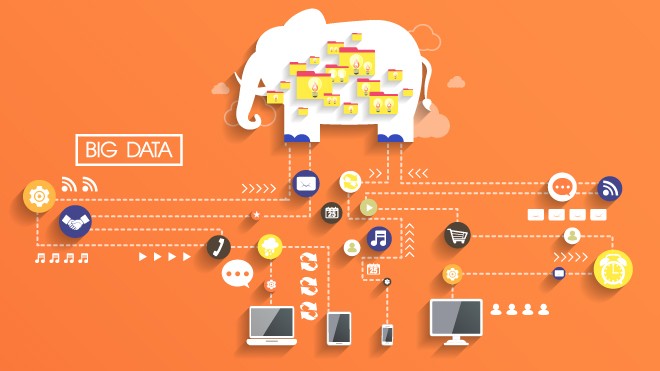
This sheer volume of raw and unstructured data is referred to as Big Data and is virtually everywhere - whatever you post in a social networking platform, the uncategorised information stored by companies on their servers, even the URLs you bookmarked - all that and more come under it.
Technologies like Hadoop are used to analyse, crunch and sift through all that information. It helps one manage and deduce what certain parts of the data mean and this could in turn indicate trends, patterns and predictions.
Nowadays, the healthcare industry is flooded with enormous amounts of data - around 80 percent of medical data is unstructured - that need validation and accurate analysis, said D. Peter Augustine, assistant professor, computer science department, Christ University, Bengaluru.
"The integration of patient data, data on the effects of drugs, medical data, research and development data and financial records by healthcare and life sciences companies, can help in identifying the patterns that give enhanced and more proactive healthcare," Augustine told IANS on the phone.
In addition, he said, if healthcare companies can integrate patient data together with social media content into their data management system, they can even get "better collection of information from which the associations concealed inside can be revealed".
Though Hadoop has proved indispensable for a thriving career in the IT and data analytics industry and has made inroads in the corporate sector as well, its potential is yet to be explored in India's healthcare and life science industries, said Mainak Maheshwari, Director (Talent) at Gurgaon's Absolutdata Analytics.
"Big Data and Hadoop are everywhere. However, in India, as far as the healthcare sector is concerned, it is not explored as much.
"Typically you will see that insurance companies would have huge amounts of data regarding health insurances. Big hospital and healthcare chains, which are not many in India, also have a good amount of data especially like the patients' database," Maheshwari told IANS on the phone.
Diwakar Chittora, CEO of Jaipur's Intellipaat.com, an online platform for high quality low cost courses, concurred.
He said biological computations, such as gene sequencing and weather forecasting, require intensive algorithms and this means those with a Hadoop skill-set, especially bio-informaticians, can do the job in lesser time.
"We have seen a sharp increase in business analysts taking the course, one of our most popular courses. Looking at the trends and growing awareness, we can definitely say there is a huge unexplored scope in medical and health industries," Chittora told IANS.
For example, he said, genetics related data requires computer-intensive algorithms and because Hadoop can harness the processing power of thousands of computer servers, spotting gene mutations, common patterns and the like can be accomplished in a matter of minutes instead of days or weeks.
Other promises include its low cost, scalability, data storage ease and flexibility, inherent data protection and self-healing capabilities.
"It can help in getting more business in these areas as well as enhance access to other health and science-related information which can used by people," said Chittora, who is in talks with a major healthcare group for Hadoop training.
For healthcare and life science professionals and freshers opting for Hadoop, a regular course would be customised in such a way that learners can correlate with cases in their own field, Chittora pointed out.
One prominent example of its applicability is India's Aadhaar system of biometric authentication, which takes advantage of open-sourced components including Hadoop, said Raju Vanapala, CEO and Founder of Hyderabad's Learn Social.com, a portal that provides instructor-led online courses.
"We have seen a shift where people who were earlier working with different technologies are going in for Hadoop, even mid-career professionals. People from a wide-variety of backgrounds are taking it up.
"Given India's population and its diversity, the government needs to leverage such technologies to make informed decisions and applications for better accessibility," Vanapala told IANS on the phone.
Augustine said achieving better outcomes at lower costs has become very important for healthcare, and Big Data analytics and Hadoop's presence are positively part of the solution in reaching that goal.
"Availability does not mean only the availability of hospitals and healthcare professionals, but it includes the necessary and accurate data on the desktop.
"Accessibility does not only mean the ability to reach the hospitals but information related to the patient, medicine and all relevant information," he said.


Indian cricket team's star batsman Virat Kohli on Monday decided to withdraw from the first two T
Through the new government, BJP has tried to appease the regional and caste groups of Delhi. By m
Pranit More has been evicted from the controversial reality show Bigg Boss Season 19. Nine contes
Ind vs Ban: Indian fast bowlers compared this Pakistani cricketer, Wasim-Sakhtar, and Waqar's trio
The first match of the two-match Test series between India and Bangladesh played a cow at the Che
Cruelty: Salty water being sold in the name of Remdesivir injection, the police nabbed the gang
The second wave of the Coronavirus is wreaking havoc in the country. More than 2.50 lakh new pati
New Delhi, Business Desk. Do you have any central employee in your family? If yes, then during th
Captain Clarke dedicates World Cup win to late Hughes
Melbourne, March 29 (IANS) Australia captain Michael Clarke on Sunday dedicated their cricket W
Ola: Despite the boom in the EV industry, Ola will lay off 1,000 employees, know the reason
Despite the tremendous boom in the electric vehicle industry, ridesharing company Ola is going to
Coldplay concert also attracted PM Modi's attention, he said- there is a lot of scope in this...
British band Coldplay is doing the 'Music of the Spheres' tour in India. Recently they performed
China has installed 3 mobile towers in the hot spring adjacent to the LoC. Konchok Stanzin, counc