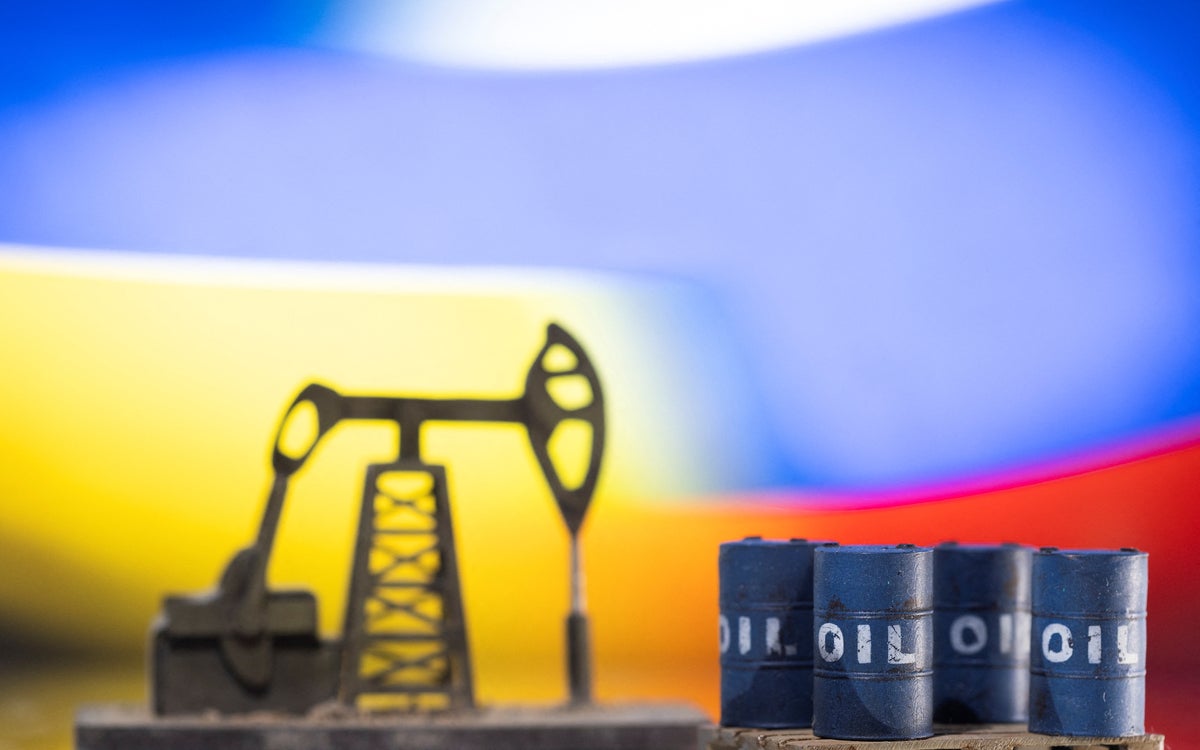
The Muslim countries of the Gulf have large reserves of the world's oil. These countries have so far given a neutral and moderate response to Russia's invasion of Ukraine.
These countries do not seem to be fully standing with America, their friend of decades. His response is to strike a balance between the West and Russia.
Behind this stand are the interests of these countries in the global energy market.
The impact of the Russian attack on international energy supplies has worried everyone. After the ban of Western countries on Russia, once crude oil reached the US $ 140 per barrel.
America's decision not to import oil from Russia has also affected the long-term stability of the oil market.
What have been the official statements?
Qatar, the United Arab Emirates, and Saudi Arabia have not directly criticized the Russian aggression. All three have stressed the need to resolve the dispute between Ukraine and Russia through negotiations.
Saudi Arabia, while maintaining its neutrality on the whole situation, has insisted on talking to both sides, leaving the use of force.
The response of the United Arab Emirates (UAE) has also been almost the same. However, on two occasions people were surprised by the steps of the UAE.
The UAE is a non-permanent member and chairman of the Security Council of the United Nations. On two occasions the UAE was absent from voting in the Ukraine war vote in the council.
After this, there was speculation in the media that the UAE had struck a deal with Russia. Because Russia voted in favor of another incoming UN resolution on Iran-backed Houthi rebels fighting in Yemen.
There were also reports in which it was being said that after the increasing attacks by Houthi rebels on the UAE, the two countries had decided to support each other in the United Nations.
The UAE later voted in favor of a resolution calling on Russia to attack Ukraine at the United Nations General Assembly. Qatar and Saudi Arabia also supported this proposal.
Qatar has also tried to keep itself neutral in the Ukraine-Russia war and has asked to avoid a military solution to the issue. Qatar had also offered to mediate between the two countries.
In contrast, Kuwait took a tough stand on the issue and criticized the military action, and said that Russia should respect Ukraine's sovereignty. Kuwait itself has been a victim of Iraqi attacks in 1990.
Will gulf countries replace Russia
After America's decision not to buy oil from Russia and sanctions from Western countries, it has started to arise whether the Gulf countries will meet the shortage of Russia.
In an interview with CNN on March 24, Qatar's Energy Minister Saad bin Sharida al-Kaabi said that his country was not taking any side in the war and would continue to supply gas to Europe. But, he said it was impossible to replace Russia.
During this, the UAE, Kuwait, and Saudi Arabia rejected the demand of the US and other countries to increase oil production through OPEC.
Abu Dhabi's Crown Prince Mohammed bin Zayed and Saudi Crown Prince Mohammed bin Salman both refused to speak to US President Joe Biden over the phone amid sanctions on Russia. The American newspaper Wall Street Journal published this report on March 8.
After this report, UAE Ambassador to the US, Yousef Al-Qataiba, said that the relationship between the UAE and the US is going through 'stress'.
British Prime Minister Boris Johnson visited the UAE and Saudi Arabia in March for energy supplies. Earlier, Britain had announced a complete shutdown of energy supply from Russia by the end of this year.
what kind of discussion in the media
The media in the Gulf countries have only repeated official statements regarding the Ukraine-Russia war. State news agencies have banned phone conversations between leaders and unbiased reporting of the war.
Gulf broadcasters Al Arabiya, Sky News Arabia, and Al Jazeera reported similarly. He has paid full attention not to raise any controversial issue and repeat the official statements only.
The ongoing discussions in the local media have focused on the tension in the relations between the UAE and Saudi Arabia with the US. Some experts say that due to this tension, these countries are not favoring America.
Estimates regarding the nuclear deal between the US and Iran have also increased tensions. Many experts say that this remains a major issue for the Gulf countries. Apart from this, America's support for the Houthi fighters backing Iran is also a reason for tension.
On March 4, the pro-UAE Al-Arab newspaper, which came out of London, wrote that Otaiba's statement was a message to the US given the US's passive attitude towards the UAE and the entire Gulf.
On April 5, Sky News Arabia, quoting an unnamed Arab official, wrote that the stand taken by the UAE and Saudi Arabia is due to the US ignoring the Gulf countries for a deal with Iran.


Army Chief General Upendra Dwivedi recently praised a soldier, knowing the reason behind which yo
Chief Minister Pushkar Singh Dhami, who reached Mahakumbh after implementing the Uniform Civil Co
FM on Inflation: Finance Minister comforts on inflation, government monitoring rising prices
Finance Minister Nirmala Sitharaman on Tuesday said that the government is taking steps where nec
Another shooter involved in the Umesh Pal murder case was killed by the police in an encounter on
Music composer Palash Muchhal is currently in the news for his personal life. He was supposed to
After the appointment of Pakistan's new army chief, former ISI chief Lt Gen Faiz Hamid has decide
AIIA: To strengthen international collaboration and promote academic research, the Ministry of AY
Delhi Chief Minister Rekha Gupta was attacked by a youth. This incident happened when she was con
The Maharashtra government has approved the proposal of the Mumbai civic body to upgrade 92 prima
A big controversy has arisen over the permission of Ganesh Puja at Idgah ground in Bengaluru, the