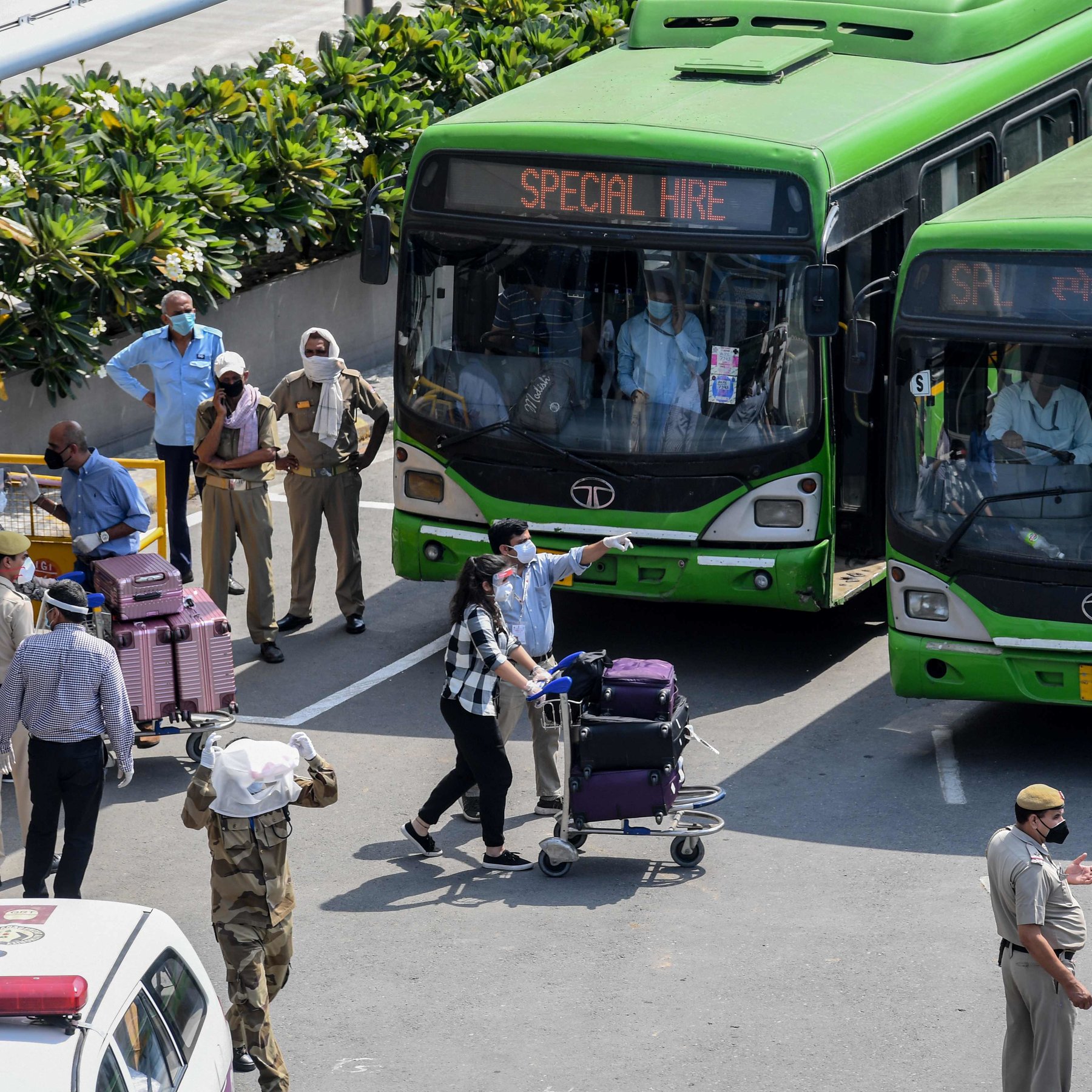
We are apprehensive about the risk of getting infected by the corona while traveling in public transport such as trains, buses, and airplanes, along with the relaxation of lockdown. There is no specific research on this, but based on the information we have about the coronavirus infection, we can assess it.
How safe are trains and buses?
The coronavirus is spread when an infected person coughs, sneezes, or leaves the virus in the air through the breath.
Viruses floating in the air can enter through the eyes, nose, and mouth of any person's body directly or by touching something where the viral particles have fallen.
There is a greater risk of infection from outside. Closed places in which the air is well maintained are less risky for infection. So public transport in which you can open the window, they are a bit better in this respect.
Risk in trains and buses depends on how crowded it is and how far you can distance yourself from others at places like bus stops and stations.
British Prime Minister Boris Johnson, bypassing the previous restrictions, announced that now anyone can use public transport at any time.
According to the guidelines issued there, you have to keep a distance of one meter from other people outside the house.
Although it is known that the virus can remain on the surface in closed places such as public transport, but in reality, it is not known how often it can turn into a new infection.
Some groups have tried to find out how much risk is there in the train, but still the question has not been answered.
Old research has mentioned the connection between London's underground traffic and the possibility of spreading respiratory disease.
Doctor Lara Goske of the Institute of Global Health says that her research published in 2018 has shown that people who use underground transport more often are more likely to show flu-like symptoms.
Keeping distance, wearing masks, and avoiding touching the surface (washing hands if touched) can reduce your risk of getting infected.
Advice for riders
Regarding this, the advice given by the British Government to the people of their country can also be useful in other places. The government there said that people should consider all other options before using public transport. If they cannot go on foot, cycle, or drive themselves then they should take some precautions.
- You can avoid traveling at a time when there is a lot of crowd.
- They can take a less busy route and avoid changing the vehicle frequently.
- Wait for all the people to get down before boarding the car.
- Keep at least one meter away from people.
- After returning from the journey, wash hands for at least 20 seconds.
Also, wearing a mask is mandatory.
How much risk in the plane?
It is a common belief that you are more likely to fall ill in a plane because you breathe "stale" air.
You can get much better quality air in a plane than a normal office. In comparison to trains and buses, you get much cleaner air in the plane.
Professor Qingyan Chen of Purdue University in Indiana estimates that air changes every two-three minutes in an airplane, whereas in an air-conditioned building it takes 10 to 12 minutes.
Most airplanes have a high-quality air filter system called HEPA.
It can capture smaller particles of air than any normal air conditioner. Some viruses can be in it.
It helps to bring fresh air from outside into the cabin while many air conditioners rotate the air in the room to save energy.
However, one problem with the airplane is that it is difficult to make a distance with other passengers, which increases the risk of infection significantly.
It is a difficult task to talk of a higher risk in a particular type of vehicle than another vehicle because there are many reasons to reduce and increase the risk.


Border 2 Announcement: The film 'Border', released in 1997 under the direction of JP Dutta, got a
Tech giant Meta has rolled out a major update for users of Facebook, Instag
iOS 27 Release Date: Apple Rolls Out Update on September 14 With New Siri AI Features
Apple is set to roll out iOS 27 on September 14, 2026, bringing a major new version of its iPhone
Shiv Sena-UBT MP Sanjay Raut has given a big statement regarding seat sharing in Mahavikas Aghadi
There is a lot of anger in India over the atrocities being committed against Hindus in Bangladesh
Hyderabad University: Professor accused of molesting foreign student suspended, police detained
A case of alleged molestation of an international student (of foreign origin) by a professor has
The country is increasingly vaccinated during the Corona epidemic. Union Minister Prakash Javadek
Petrol and diesel will soon be cheap. It is reported that the Finance Ministry is planning to red
Following the India-Pakistan match, a barrage of rhetoric has intensified in Pakistani cricket. F
Tata Chemicals Shares Hit 20% Upper Circuit: RBI Move on Tata Sons Sparks IPO Listing Buzz
Tata Chemicals shares surged 20% to hit the upper circuit on Tuesday, September 15, after the Res