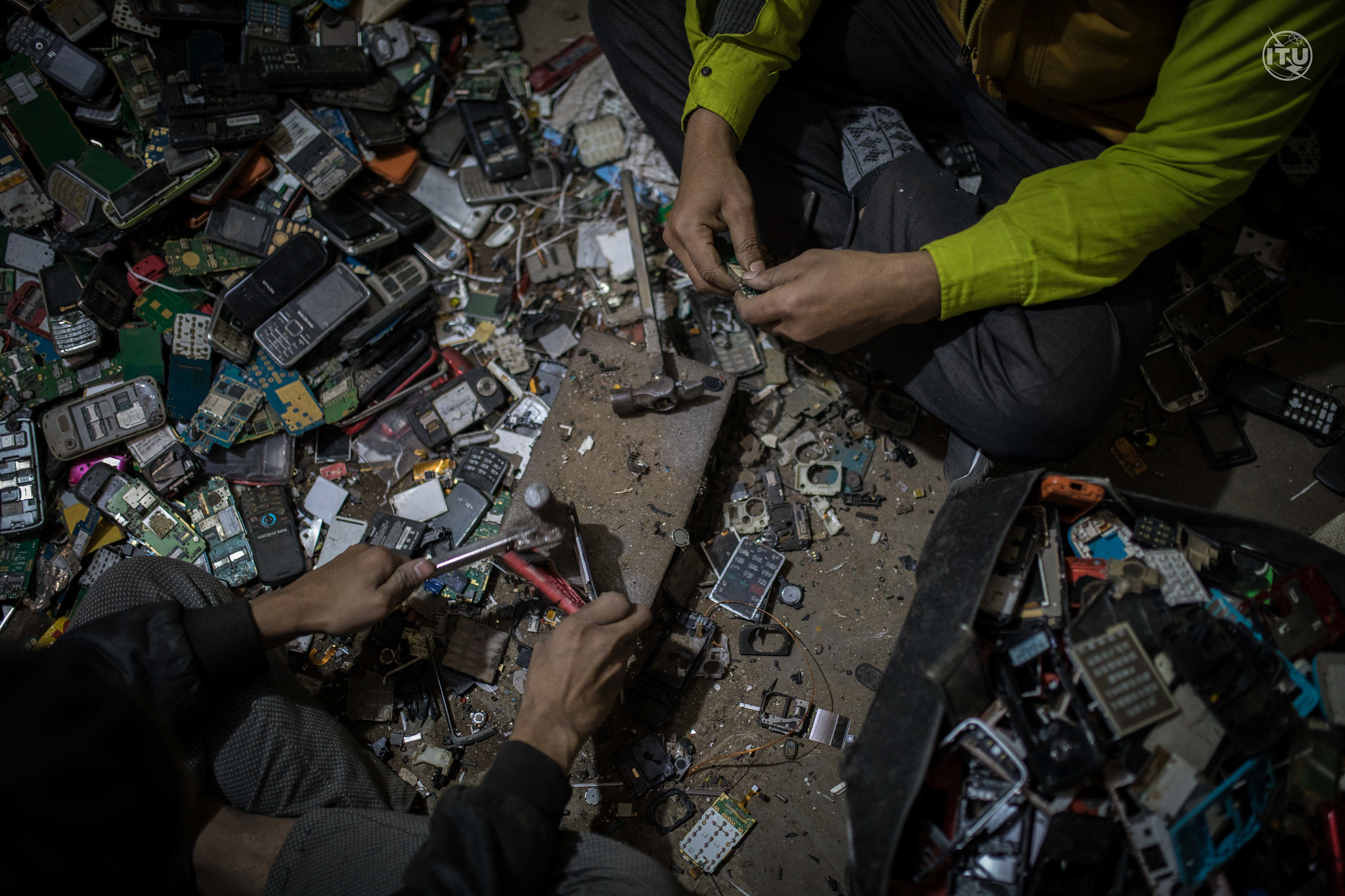
In the present information and technology era, electronic devices are like our lifeline. From mobile to freeze and small technical disturbances in the car, many times become a factor of financial and mental stress. The biggest reason for this is the mysterious cost and mental hassle involved in fixing any technical glitch in your device.
Many electronic devices in your home are turning into e-waste simply because the cost of repairing them is far more convenient than buying a new product. It is for this reason that the 'Right to Repair has been at the center of public debate in Europe and America for the past decade. Right to repair has given a new shape to consumer interests in America, the UK, the EU to Australia. By making a law in Britain, all types of electronic equipment have been included in the right to repair. There it has been made mandatory for companies to share spare parts with consumers. Customers can get it repaired in any shop they want.
Job Market Requirement
Due to the right to repair in the European Union, each brand is obliged to supply the components associated with the product to a professional repairman for 10 years. Repair cafes have been opened in Australia, where volunteers with their skills provide technical services to people free of cost. According to a survey conducted by LocalCircles, on average, in every second household, some five-year-old device is turning into the garbage because of the high repair cost.
In the survey, 43 percent of people have a five-year-old desktop, laptop, smartphone, printer, tablet, washing machine, freeze, fan, mixer, etc. due to non-repairing. The condition of the automobile industry is even worse. In the name of servicing the vehicle and the original spare part, the customer is forced to make rounds from the service center to the dealership. Keeping in view the needs of consumer rights, environmental solutions, and the job market, the central government has also moved towards the Right to Repair Act.
Right to Repair Act
The Consumer Affairs Ministry has constituted a committee, which is preparing the draft of this law. As soon as this law comes into existence, it will be mandatory for the manufacturer to share information related to the product with the customers. If Right to Repair comes into existence, companies will have to share all manuals, repair modules, and software updates related to the product with the customers. This will change the entire ecosystem of the repair industry. This can increase the efficiency of workers at local mechanics and repair shops, thereby curbing the monopoly tendency of original equipment manufacturers.
The importance of this law for India is more than any other country in the world. There is hardly any street in the country which does not have a repair shop. With this, we can give a new identity to the workforce of the unorganized sector. This will strengthen the local businesses along with the consumers. Right now, due to the lack of access to quality and original parts from local repair shops, people look at them with apprehension. If the supply of original spare parts in the local market increases, it will encourage 'Make in India'. Many items including mobile phones, tablets, electronics, automobiles, medical devices to agricultural equipment will come under the ambit of the Right to Repair. It will also help in reducing the carbon footprint. E-device repair being convenient and cost-efficient will have a direct impact in the form of a reduction of e-waste.
By eliminating the shortage of original components, electronic products can be made more durable. This will reduce the production of e-waste. By the way, companies will agree so easily on the Right to Repair, it is less expected. Concerns related to privacy, cyber security, and brand have been expressed by the companies. In such a situation, for the restoration of trust between the consumers and the manufacturers, the apprehensions of both have to be allayed. The law will have to take concrete measures so that instead of deteriorating the competitive environment of the brand and the open market, it is further strengthened. The Right to Repair Act is being projected only in the interests of consumers, while it will also sustain the sustainability of everything from electronic products to the climate and the job market. Today, on the occasion of e-waste day, it should be thought about.


The video of IPS officer Anirudh Singh posted as SP Rural in Meerut taking a bribe went viral on
Transport service remained disrupted on Thursday due to rain and fog. 12 flights to and from Lal
The Defense Ministry of India is at the forefront of the world in terms of providing jobs or empl
PM Modi's Unique Style in Gangtok: Plays Football with Youth; Shares Photos
Prime Minister Narendra Modi has arrived in Sikkim for a two-day visit. During this visit, he wil
A UN Security Council resolution on Wednesday (local time) urged Myanmar's junta to "immediately
India A vs Australia A: India A Seal 162-Run Win as Kushagra Scores 159 and Mulani Claims 7 Wickets
India A defeated Australia A by 162 runs in the first unofficial Test at the Cricket Association
India's stellar performance continues in the Paris Paralympics 2024 Games. Indian athletes perfor
The Punjab Police has canceled the leaves of policemen till April 14 after separatist and Waris P
German Foreign Minister Annalena Bayerbach has described India as a natural partner of Germany. H
Prime Minister Narendra Modi on Saturday met prominent yoga instructors Reem Jabak and Nada Adel