The saffron brotherhood is apparently coming to terms with India's pluralism - and the constitution.
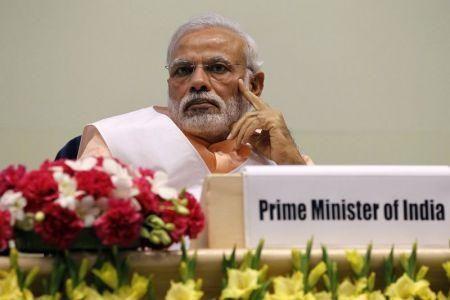
As Prime Minister Narendra Modi's observation that his government will act against any religious group inciting violence shows he has realized, albeit belatedly, that he cannot afford to maintain his "dangerous silence", to quote the New York Times, on the intimidation of minorities by Hindu groups affiliated to the Rashtriya Swayamsevak Sangh (RSS).
During his prolonged silence, he may have presumed that his backstage counsels of restraint will be accepted by groups such as the Vishwa Hindu Parishad (VHP), which have a long history of fomenting communal trouble.
That the VHP has chosen to give a contrary interpretation to Modi's speech other than what is generally supposed, by saying that the prime minister was only cautioning the Christians, shows that it remains unrepentant.
However, when the prime minister saw that his quietness was being interpreted as either weakness or acquiescence, he decided to speak out in unambiguous terms.
Moreover, by reiterating the constitutional rights about the propagation of religions and of conversions, the prime minister has turned his back on one of the most provocative of antics conjured up by the saffronties in the name of the minorities returning to their "original" faith of Hinduism via a contrived 'ghar wapsi' or home-coming ceremony.
It is not Modi alone who has recognized the norms of personal liberty. The RSS chief, Mohan Bhagwat, too, has ticked off BJP MP Sakshi Maharaj for calling upon Hindu women to bear four children each. Hindu mothers are not baby-producing factories, Bhagwat has said.
However, this advice goes against the old saffron campaign cautioning against a demographic shift in favour of the minorities with Bhagwat's predecessor, the late K.S. Sudarshan, asking Hindus to have more children.
What these deviations from the standard saffron line suggest is that the BJP may soon have a new face. The fact that it will bear a close resemblance to the "pseudo-secular" demeanours of the Congress and other non-BJP parties may be a cause of worry to the Hindutva camp, but the rest of the country cannot but welcome such a change.
It is not impossible that the latest electoral drubbing in Delhi has reminded the BJP that the people voted for it not to implement the anti-minority saffron agenda but to revive the economy which had ground to a halt under the Manmohan Singh government.
If Modi persists with his tough line against the trouble-makers of his own party and the RSS affiliates, there will be a new beginning for India in terms of both communal harmony and economic progress.
Such an initiation is likely to take the country towards the direction favoured by Nobel laureate Amartya Sen, who told the Jaipur literature festival last year that he wanted a "pro-market, pro-business party that does not depend on religious politics and does not prioritize one religious community over all the others".
The BJP has a fair chance of becoming such a party if it can marginalize its loony fringe like Britain's Labour party once did.
Now that the Congress has shown signs of pursuing a left-of-centre path since the "right-wing space does not belong to us", as party general secretary Digvijay Singh has said, there is every possibility of a straightforward confrontation between the BJP and parties like the Biju Janata Dal and the AIADMK on one side and the Congress, the communists, the DMK and the caste-based parties of the Hindi belt on the other.
In that case, the political and economic scene will have much greater clarity compared to the present when Modi's neo-liberal policies are opposed not only by the Congress, the communists and others but also by neo-fascistic elements of the Hindutva lobby.
Whether Modi will win or lose cannot be said for certain at present since he will be taking on elements that have an entrenched interest in opposing right-wing policies for varying reasons.
While the Congress opposes them because it does not want to abandon the Nehruvian concept of establishing a "socialistic pattern of society", as a 1955 resolution adopted by the party said, the communists see the pro-market approach as a surrender to American neo-imperialism.
To the RSS, capitalism is the extension of a Western model of the economy and an accompanying governing style based on individualism and consumerism which can undermine the nation's tradition-bound and abstemious heritage.
On the other hand, parties like the DMK, the casteist outfits of the Hindi heartland, the Trinamool Congress and others favour a controlled economy since, they believe, it will enable them to fill the public sector units with their party rank and file without any thought about efficiency and competitiveness.
In this Utopian, anti-American and self-serving world in which there is a curious meeting of minds between the Left and the Right, Modi remains virtually the only one among the top leaders who has recognized the need to shed the fetishes of the past and enter the present globalized economy.
He also seemingly has the tenacity of purpose to overcome the obstacles in his path such as those posed by the Hindutva Gestapo. If he succeeds, the BJP will have broken free from the shackles of the RSS.
(21.02.2015 - Amulya Ganguli is a political analyst. The views expressed are personal. He can be reached at amulyaganguli@gmail.com )


Modi to inaugurate Rourkela Steel Plant's modernised units
Bhubaneswar, March 23 (IANS) Prime Minister Narendra Modi will visit Odisha on April 1 to dedic
Ukraine Conflict News: The dispute between Ukraine and Russia has torn the world. All the countri
Ukraine Russia War: US President Joe Biden has warned Russia against using nuclear weapons in Ukr
Will ensure Technical Education for Women: Irani
New Delhi, March 9 (IANS) Human Resource Development Minister Smriti Irani on Monday said she w
Vigorous preparations were going on for Shivratri at Assi Ghat in Banaras. A grand Ganga Aarti wa
Amidst the scenes on Friday of deceased tourists being recovered from the cruise boat that sank i
Chinese embassies have stopped issuing new visas for South Korean and Japanese citizens amid incr
Good news amid Corona crisis, Covid vaccine passed in children's examination
A new ray of hope has arisen in the war against Corona. The Covid-19 vaccine developed by Pfizer-
Following the Israeli-American attack on Iran, the entire Middle East has been placed under threa
Star wicketkeeper-batsman Sanju Samson, who led India to the semi-finals of the T20 World Cup 202