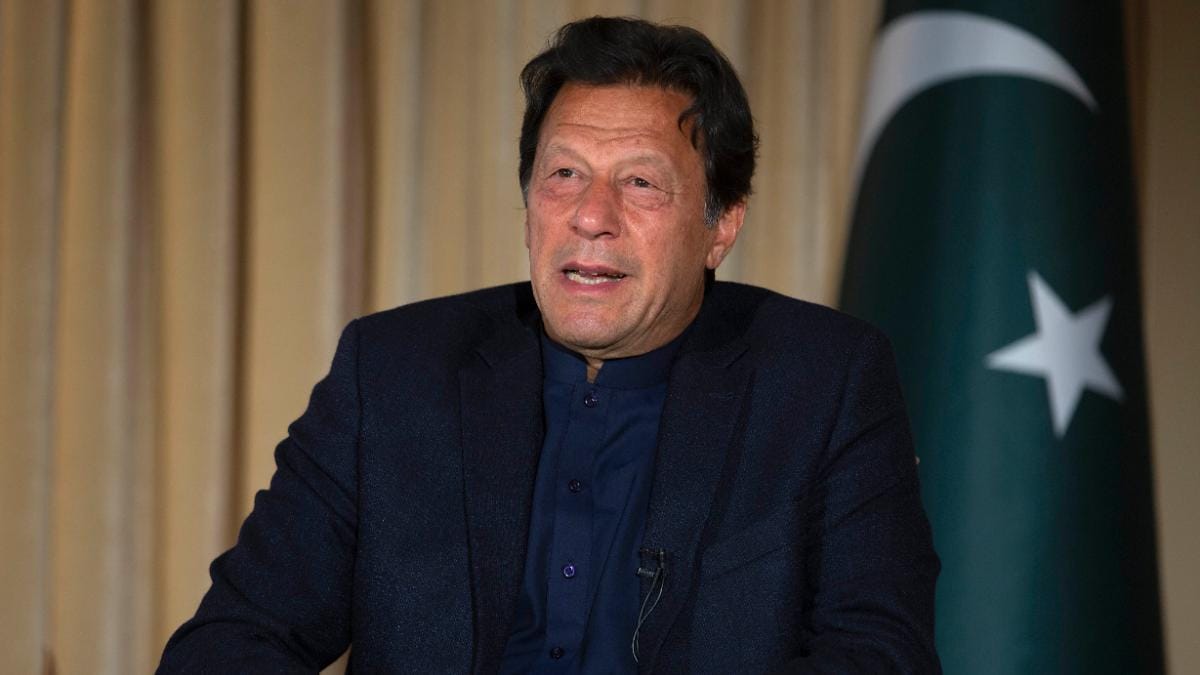
For some time, Pakistan has been struggling to remove its name from the gray list of FATF.
In June 2018, Pakistan was put on the gray list by the Financial Action Task Force, an international organization that monitors the financing of financial irregularities, money laundering, and extremism around the world. Generally, monitoring of the countries falling in this list is increased.
Pakistan was given time till October 2019 to implement law and regulatory measures against the ongoing fight against money laundering and terror funding, which was further extended for four months.
In February 2020, assuming that Pakistan had taken action on only 14 of the 27-point action plan, the FATF retained Pakistan in the gray list because of the shortfall in many areas regarding these actions.
Now the FATF officials are going to have a meeting between 14-21 September where once again the actions taken on the remaining 13 points of Pakistan will be reviewed.
Like North Korea and Iran
This will be followed by a plenary meeting in October where it will be decided whether Pakistan will remain in the gray list or go to the white list or will be blacklisted like North Korea and Iran.
Meeting in September, Pakistan's government has said that it has prepared eight bills to amend the current anti-money laundering and financing law of extremism.
It set up a joint committee consisting of 24 government and opposition MPs to form a consensus on these bills, where the government does not have a majority in the upper house of Parliament, so it was forced to do so.
Since then, Parliament has so far passed six out of eight bills with the support of the opposition. However, military influence is also believed to be behind this very special consensus.
Arrested and convicted
The FATF Action Plan has specifically asked Pakistan to show banned organizations and convicts by punishing them under the law and confiscating their properties.
As before, the government of Pakistan has done the work of punishing and banning many high profile people before the FATF meeting.
In August, Pakistan announced sanctions against 88 people belonging to various extremist groups, including Islamic State, Al Qaeda, and Tehreek-e-Taliban Pakistan.
Likewise, Hafiz Saeed, the founder of anti-India Lashkar-e-Taiba and founder of his charity wing Jamaat-ud-Dawa, was accused of funding terrorism on August 27 before the FATF meeting in February. Pakistan court has been found guilty of the charge.
However, keeping in view the history of arresting the miracles (including Saeed), from arrest to release, it will continue to monitor how it is seen in front of FATF.
Diplomacy
Apart from complying with the action plan, Pakistan is also hoping to get help from its diplomatic relations in this matter. In the past, the support of Turkey, Malaysia, and China has been important in keeping Pakistan away from the blacklist.
Meanwhile, China is also pushing Pakistan to step up its efforts against extremist organizations and fulfill the demands of FATF.
According to reports in the Indian media, during his recent visit to Beijing, Pakistan Foreign Minister Shah Mehmuah Qureshi has sought support from China for the upcoming plenary meeting.
Pakistan is also hoping that its role in facilitating Afghanistan's peace process will also positively affect the US position in the FATF meeting.
It is believed that the US has persuaded Saudi Arabia to withdraw its decisive vote against Pakistan so that Pakistan can be excluded from the gray list of 2018.
Pakistan has also been playing an important role in persuading the Taliban for important talks in US President Donald Trump's plan to withdraw US forces from Afghanistan.
In August, Pakistan has ordered the UN Security Council to impose sanctions against the Afghan Taliban, no doubt due to the FATF meeting.
It has also hosted a high-level Taliban delegation considered to be extremely important as the next step towards the peace process.
The challenges
However, there are some things which are coming in the way of all these efforts of Pakistan.
Especially India's complaints that Pakistan has not yet stopped supporting extremist groups operating from their country.
In August, the National Investigation Agency (NIA) in India recorded a 13,500-page report that named 19 people, including the head of Pakistan-based extremist group Jaish-e-Mohammed, Maulana Masood Azhar, who allegedly administered India in 2019. CRPF squad was attacked in Pulwama and 40 security personnel were killed. Indian officials claim that there is irrefutable evidence in this report about Pakistan's role in the Pulwama attack.
What is going on in the local media?
Pakistan's media is closely covering the decisions of the FATF and the government's efforts on its demand.
The efforts of the government have been appreciated in the media. On August 1, an editorial in the English newspaper Pakistan Today wrote, "If Pakistan survives from being blacklisted ahead of FATF, the way the government has so far made a motion to stop money laundering and financing should not be reduced. "
Similarly, Amir Rana, an expert on security affairs in the World News talk show "Duniya Kamran Khan Ke Saath", said that "Pakistan's report on 13 points is very satisfactory, which is to be reviewed in October" and he predicted that Pakistan Will be removed from the gray list.
However, most of the media coverage focused on the confrontation between the government and the opposition.
The opposition has been repeatedly accusing the government of violating the agreements made in the 24-member committee, while the government says that the opposition is supporting its laws on the FATF for concessions.
At the same time, the opposition parties claim that the government is trying to take autocratic powers under the guise of related legal amendments related to FATF. This argument was also discussed in the media.
Don wrote, "Under the guise of enacting laws related to FATF, the government secretly tried to introduce an 'Economic Terrorism' bill which is very unethical and dangerous. In the proposed law any recommendation on the committee made of intelligence agencies There is a provision to keep the citizen in custody for 180 days. Fortunately, the opposition dropped it. "
At the same time, the nationalist Urdu daily Nawa-e-Waqt wrote to the opposition urging the government to compromise, "Pakistan needs this bill today because it is allegedly needed in FATF. This is a very absurd argument because Pakistan is its Report of activities that have already been submitted to FATF.


PM Modi said in a recent interview that 'he wants to alert the SC, ST, and OBC category because t
The Supreme Court heard the stray dog case on Monday. The Chief Secretaries of all states a
Election strategist Prashant Kishor has once again targeted Congress. Kishor has questioned Congr
Gurugram - 24 patients died in a week due to corona infection
Gurugram. In the case of corona infection, the situation in the district is improving rapidly, bu
Oil companies have released the prices of petrol and diesel for today. Today companies have chang
Jharkhand Politics: The MLAs of the Jharkhand Grand Alliance government have been shifted from Ra
'Hindu women were crying, houses and shops were set on fire. There was fear on every face. The Hi
After the Indian team won the T20 World Cup 2024 title, the fans got one shock after another. Aft
Republic TV editor-in-chief Arnab Goswami has challenged the Supreme Court's order rejecting the
The air quality in the national capital Delhi and the entire NCR has once again reached the sever